Custom software shaped around your business, data and constraints From discovery and architecture to tested releases, documentation and a support plan—using only the technology the product needs.
T2E / APPLICATION WORKFLOW → DATA → INTERFACE WHO IT IS FOR For organisations connecting several systems or building a digital product that standard software cannot support.
OUR APPROACH Define the outcome, scope and acceptance criteria before choosing technology, so the investment solves a real problem and remains maintainable.
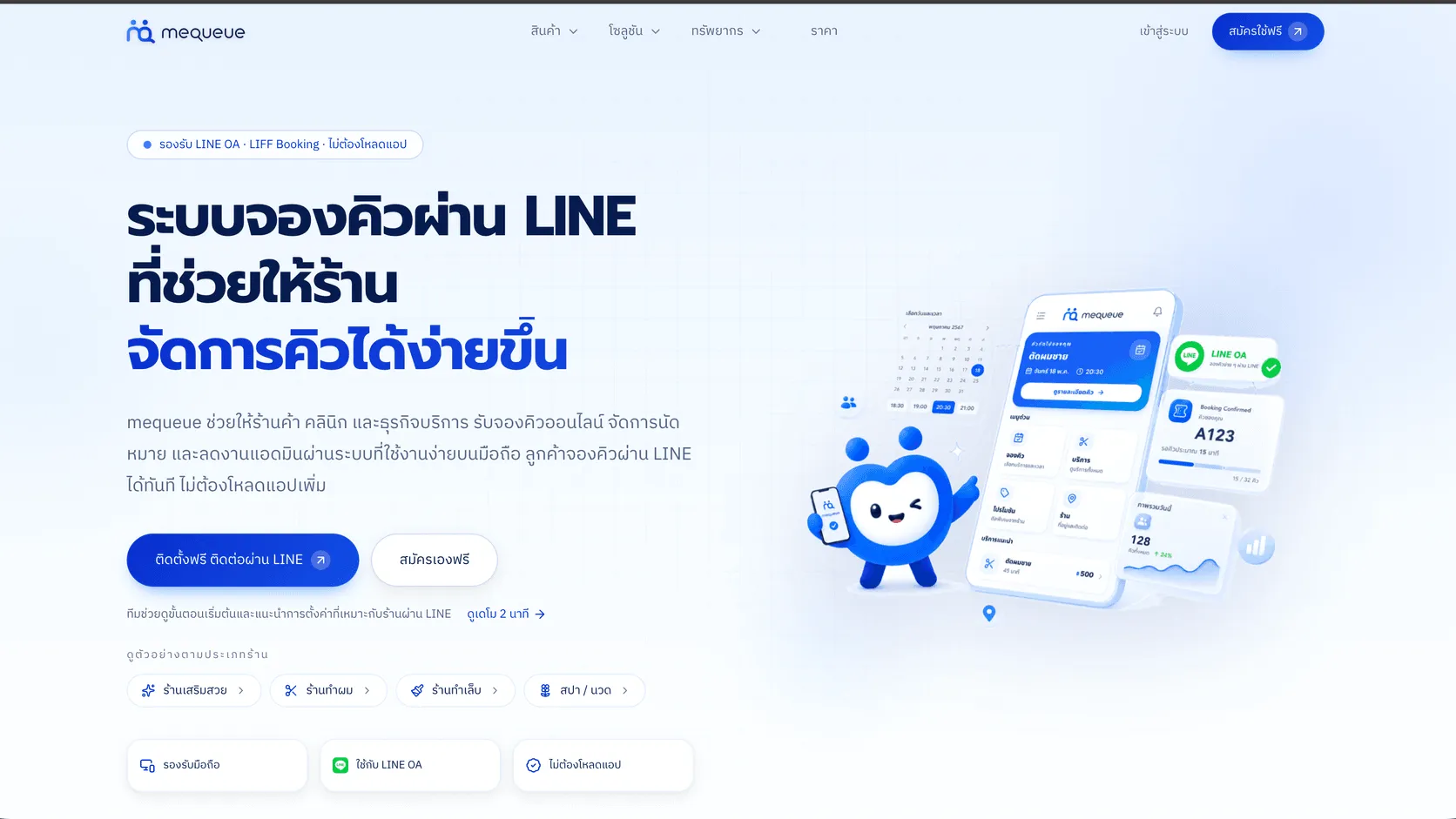
The approach, shown in real work CASE STUDY A LINE-based queue and appointment platform for service businesses, with a mobile booking flow for customers and appointment management for staff.
Explore MeQueue → PROBLEM
Problems to solve before adding another tool. Off-the-shelf software forces the wrong workflow Important data is split across systems Legacy products are difficult to extend and undocumented The project needs both product and engineering judgement OUTCOME
What the project should make better. Architecture aligned with risk and budget A release roadmap with acceptance criteria A testable and observable system Clear documentation and ownership USE CASES
Useful scopes shaped around the work. 01 System Integration Connect APIs and data with validation, retries and audit history.
02 Business Platform Bring critical workflows into a role-aware system.
03 Digital Product MVP Prove product value through a measurable first release.
04 Legacy Modernisation Isolate risk and migrate without stopping everything at once.
SYSTEM THINKING From workflow to an application that can be accepted Connections, permissions and failure states are designed alongside the interface, so a simple front end does not hide operational risk.
Inputs User roles Workflow Business data → System & outcomes Interface Permissions UAT & monitoring DELIVERABLES
Deliverables that can be accepted and operated. 01 Technical discovery 02 Architecture and delivery roadmap 03 Product and interface design 04 Incremental development and QA 05 Operational documentation and support plan SCOPE & INVESTMENT Project scope and pricing inputs Scope follows uncertainty, integration risk, data, security and long-term operation. Screen count alone is not a meaningful estimate.
01 Scope and uncertainty 02 Integrations and migration 03 Security and compliance 04 Support and release model ACCEPTANCE & OPERATION
Acceptance and operating costs Project acceptance criteria Agree API contracts and test failure cases Test permissions, migration and the agreed rollback plan Hand over source, deployment documentation and account ownership Ongoing costs to itemise in the proposal Domain, hosting and the chosen CMS Content, dependency and integration maintenance Monitoring, backups and scoped support Test coverage and operating responsibilities are agreed for the project before work begins.
From scope to acceptance and handover 01 /
Understand Discuss goals, audiences and constraints to define a useful scope.
02 /
Design Make structure and interactions clear before development begins.
03 /
Build & test Develop the system and test critical journeys across real devices.
04 /
Launch & support Launch, share documentation and use evidence to guide improvements.
Agree test cases, reviewers, account ownership and support before work. Test critical journeys with approved data before launch.
Related services, work and guides SERVICE Booking systems, portals and internal web applications built around your business workflows, with defined roles, integrations and acceptance criteria.
Explore Web Application Development for Business in Thailand → SERVICE Agents that connect knowledge, tools and business rules—designed with evaluation, permissions, human approval and fallback from the start.
Explore AI agent development for real business work → GUIDE A practical way to separate a communication-led website from a data and workflow-led web application before scoping a project.
Explore Website vs web application: what does your business actually need? → GUIDE Turn workflows, roles, data, integrations and failure cases into an estimable brief, with a worked appointment example and acceptance checklist.
Explore Web application requirements: a brief you can estimate and accept → FAQ
Questions before the work begins. Should we use standard software or build? If an existing product meets most needs and process adaptation is inexpensive, it is often the better choice. Custom software is justified when the difference matters materially.
Can you take over an existing system? Review source code, account access, data, deployment and integrations before choosing to improve the current system, add an API or replace a specific part. Agree backup, testing and rollback before migration. Feasibility and cost depend on examining the actual system.
Can delivery be phased? Yes. We prefer phases that release a complete workflow or outcome rather than splitting only by technical layer.
NEXT STEP Have a problem worth scoping clearly? Share the context, outcome and systems involved. We will help identify the questions to answer before investing.