Thai–English corporate websites with clear services, project evidence and enquiry paths. Define content editing, migration and handover before development.
Price and delivery dates follow the agreed content, functionality and review rounds. Development, domains, hosting, tools and advertising spend are itemised separately.
PROBLEM
Problems to solve before adding another tool.
Corporate information is difficult to scan
The online presence does not match the business
Sales teams repeatedly assemble the same materials
The existing site cannot support languages or SEO cleanly
OUTCOME
What the project should make better.
A clear corporate narrative
Services and industries organised for buyers
A central reference for sales and stakeholders
A structure ready for languages, news and case studies
Explain expertise, process and client fit with confidence.
02
Manufacturing
Organise products, standards, safety and support.
03
Logistics
Clarify services, routes, documents and quotation paths.
04
Multilingual Business
Give every language a deliberate URL, canonical and hreflang system.
BEFORE YOU START
Support B2B buyers and the sales team
Organise services, proof and company information around the decisions buyers make before requesting a quotation.
01
Connect services with real work
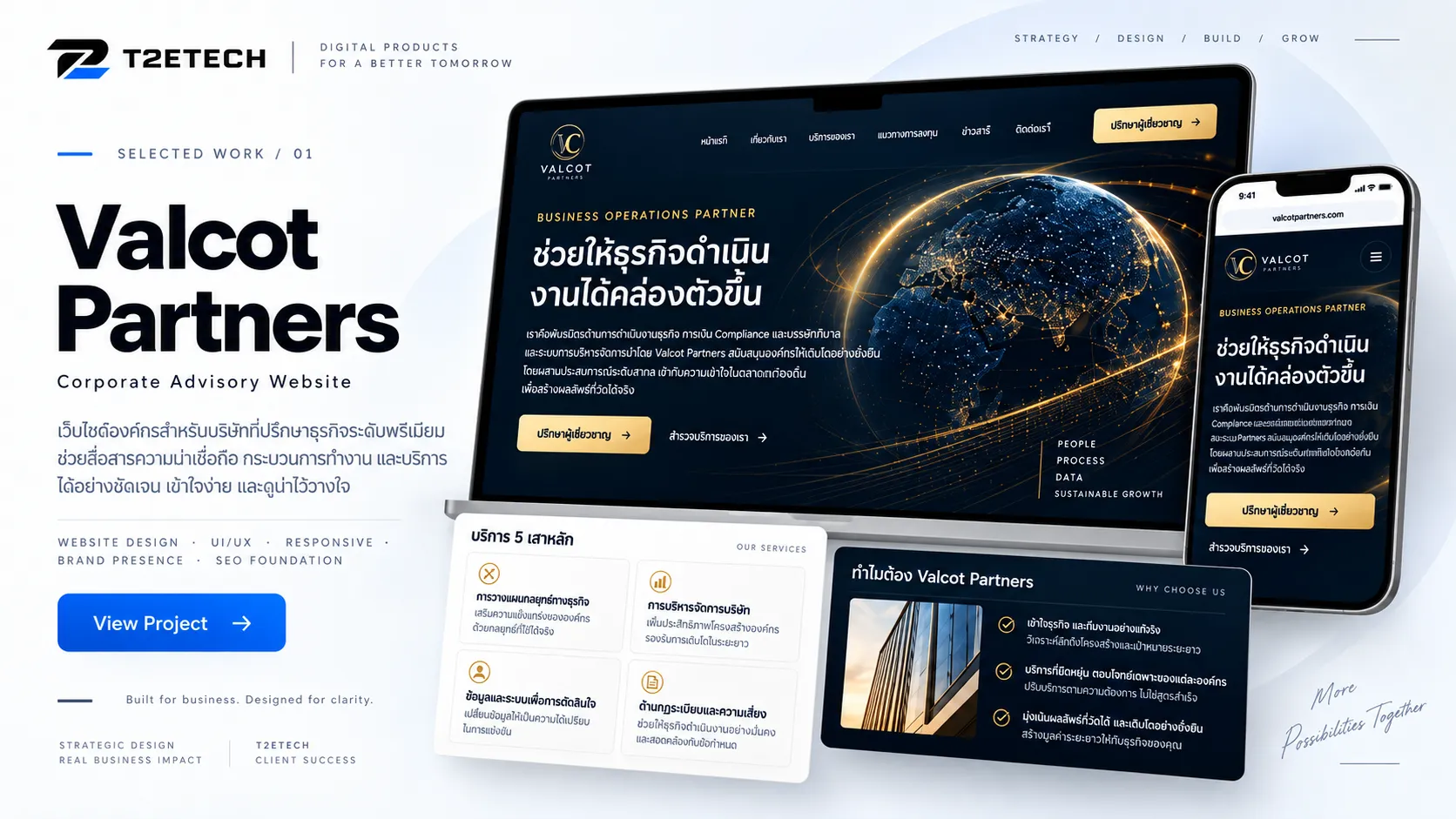
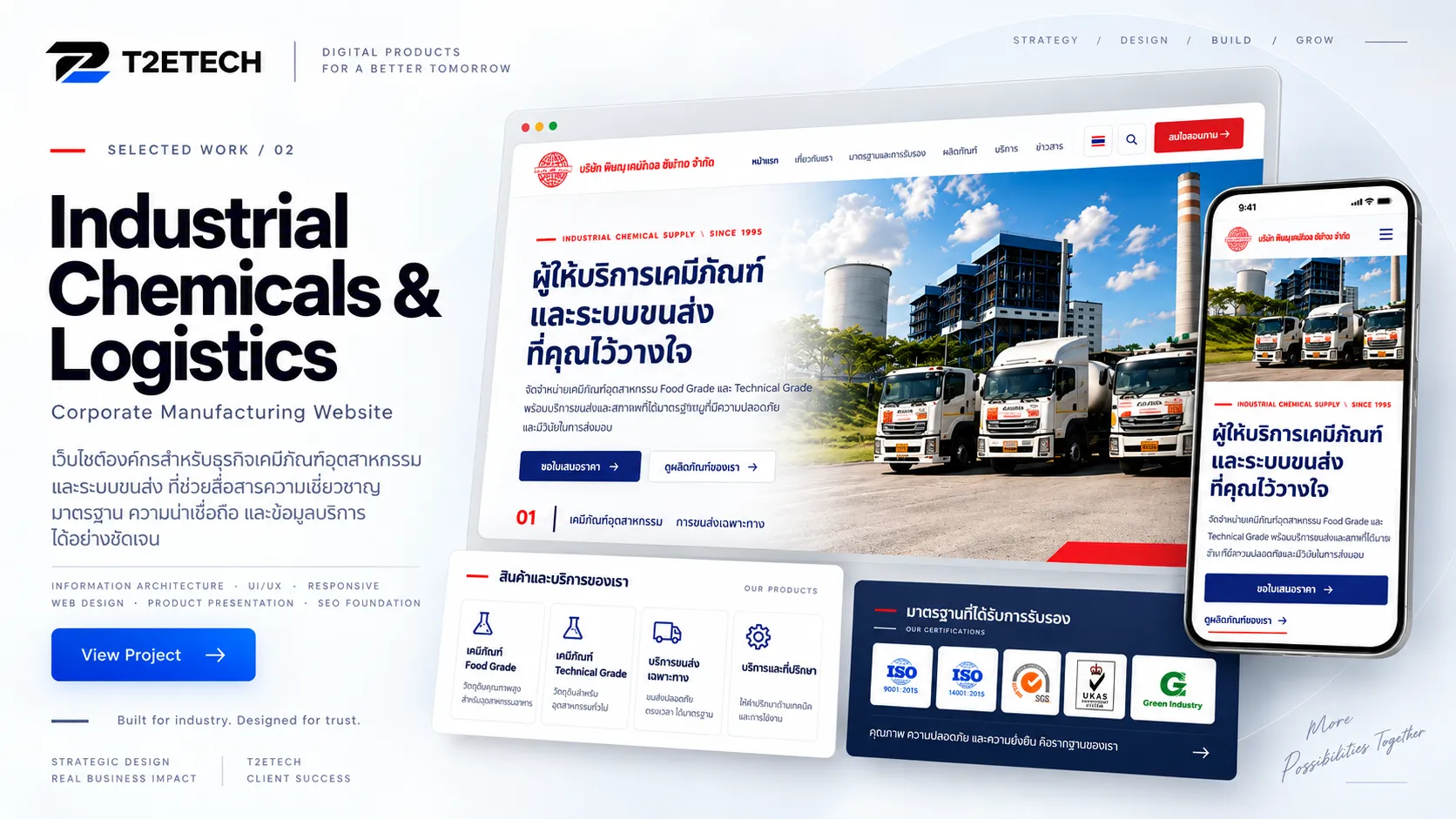
Explain who each service helps. Link work such as Valcot Partners and the industrial project so buyers can assess the approach and scope.
02
Maintain both languages
Agree content owners, reviewers and company facts so Thai, English and downloadable documents stay consistent.
03
Make the sales handoff clear
Let prospects share the relevant service and brief on LINE or an agreed channel, with an accountable owner and follow-up process.
SYSTEM THINKING
A structure users, search engines and the business can understand
Organise services and work around buyer questions. Give each page a clear job, then test mobile reading, content editing and quotation paths before launch.
Inputs
Audience intent
Content
Brand system
→
System & outcomes
Responsive UI
SEO & performance
Measurement
DELIVERABLES
Deliverables that can be accepted and operated.
01
Brand and stakeholder discovery
02
Corporate information architecture
03
Multilingual content structure
04
Responsive design and development
05
SEO migration and editor handover
SCOPE & INVESTMENT
Project scope and pricing inputs
The scope follows business units, languages, existing content, migration and any CRM or enterprise-form integration.
Before work begins, the proposal identifies inclusions, exclusions, review rounds, delivery dates, ownership and support. If the budget is undecided, start by sharing the scope.
01Services and audiences
02Languages and localisation
03Legacy content migration
04Editorial workflow
ACCEPTANCE & OPERATION
Acceptance and operating costs
Project acceptance criteria
Check service and proof relationships across both languages
Deliver service context to sales without analytics PII
Review company documents and publishing approval
Ongoing costs to itemise in the proposal
Domain, hosting and the chosen CMS
Content, dependency and integration maintenance
Monitoring, backups and scoped support
Test coverage and operating responsibilities are agreed for the project before work begins.
From scope to acceptance and handover
01 /
Understand
Discuss goals, audiences and constraints to define a useful scope.
02 /
Design
Make structure and interactions clear before development begins.
03 /
Build & test
Develop the system and test critical journeys across real devices.
04 /
Launch & support
Launch, share documentation and use evidence to guide improvements.
Agree test cases, reviewers, account ownership and support before work. Test critical journeys with approved data before launch.
Business website design and development in Thailand, with clear user journeys, SEO foundations and a practical handover. Explore real work and scope your project.
It should explain what the organisation does, who it is for, why it is credible, how engagement works and what to do next. The exact structure should follow buyer decisions.
Can the site support Thai and English?
Yes. Each language receives its own URLs and metadata with correct canonicals and hreflang, plus localisation that reads naturally.
Can our team update content?
Yes when a CMS is useful. We define editable fields, permissions and guidance so routine updates do not damage layout or SEO.
Should a company website use a standard platform or a custom design?
Start with the information buyers need and the content the team must maintain. A standard platform may fit an established structure; custom design can address distinct services, languages, documents or integrations. Compare scope, account ownership and ongoing costs before choosing.
A USEFUL FIRST MESSAGE
Prepare a quote brief. Continue on LINE.
Choose what you know, copy the message and add your business details in LINE. An existing website or a fixed budget is not required to start.